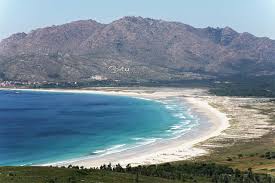
Playa de Carnota is Galicia's longest beach, a stunning 7-kilometer virgin stretch of sand surrounded by dunes and marshes, ideal for nature lovers and those seeking tranquility.
Ask AI about this beach
Instant answers about Playa de Carnota

🦑 Did you know...?
Las medusas abundan más tras días de viento hacia la costa (levante en el Mediterráneo).
About this beach
Table of contents
Introduction
If there is one place that embodies the grandeur and untamed beauty of Galicia's Costa da Morte, it is undoubtedly Playa de Carnota. We are not talking about just any beach; we are facing the most extensive stretch of sand in all of Galicia, a majestic seven-kilometer tongue of sand that extends between the Atlantic Ocean and a complex system of dunes and marshes. Visiting it is to enter a natural sanctuary, a space where the hand of man has barely left a trace, allowing nature to express itself in all its magnificence.
From the first moment we step on its fine sand, we feel a deep connection with the environment. The sound of the sea, the Atlantic breeze, and the immensity of the landscape invite us to disconnect, take a deep breath, and let ourselves be carried away by the magic of this corner of A Coruña. Playa de Carnota is not just a destination for swimming, but a vital experience, a constantly changing canvas where every sunrise and sunset paint an unforgettable spectacle. It is a place that invites reflection, adventure, and, above all, admiration for the strength and delicacy of nature.
How to Get to Playa de Carnota
Getting to Playa de Carnota is relatively straightforward, although its length requires considering several access points. We usually recommend arriving by car, as it is the most comfortable option for exploring the entire area. The beach is located in the municipality of Carnota, in the province of A Coruña, and the main road that borders it is the AC-550. From Santiago de Compostela, the journey takes approximately one hour and twenty minutes, while from A Coruña city, it will take about an hour and a half.
There are several access points along its seven kilometers. The most well-known ones with more parking areas (though often informal and unpaved) are usually near small population centers like Boca do Río, Caldebarcos, or Lira. We usually look for parking closest to the dune areas, always respecting the signage and the natural environment. It is important to remember that, being such an extensive and natural space, you will not find large asphalted parking lots like at other more urban beaches. The key is to arrive early during the high season to secure a good spot.
The Sand and Water
The sand of Playa de Carnota is, without a doubt, one of its great attractions: fine, pale golden in color, and extraordinarily clean. Walking barefoot on it is a delight, and its width allows us to enjoy long walks without crowds, even on the busiest days. The dunes, a fragile and highly valuable ecosystem, are the guardians of this sandy beach, and we must always be respectful, avoiding walking on them and using the boardwalks when available. These dunes are home to specific flora and fauna, contributing to the beach's ecological richness.
As for the water, we are on the Galician Atlantic, which means it is usually cool, even in the middle of summer. Its tones range from emerald green to deep blue, depending on the light and sea conditions. The waves can be considerable, especially on windy days, making it an exciting place for wave lovers, but it also requires caution. We always advise paying attention to the warning flags and lifeguards' instructions, especially if with children. The water's clarity, however, is remarkable, inviting us to immerse ourselves and enjoy a purifying swim.
Services and Facilities
Despite its wild character, Playa de Carnota offers a series of basic services that contribute to a comfortable and safe visit, especially during the summer season. We have noticed that, although it is not an urbanized beach, efforts are made to maintain certain amenities for visitors. Among the most common services we can find, we highlight:
- Lifeguards: During the summer months, the beach has lifeguard posts that watch over the safety of bathers. It is essential to follow their instructions.
- Showers and Toilets/WC: At some of the main access points, especially in areas like Boca do Río, it is common to find shower and toilet modules, a relief after a day at the beach.
- Parking: As already mentioned, there are parking areas, generally unpaved, near the access points. It is always free, but it can fill up during peak hours.
- Chiringuitos: During the high season, one or two beach bars (chiringuitos) are usually set up at strategic points on the beach. They are perfect for having a cool drink, an ice cream, or even enjoying a snack with sea views. We always appreciate being able to enjoy a coffee with those views.
Best Time to Visit
The choice of the best time to visit Playa de Carnota depends a lot on what we are looking for in our experience. We, with our experience, can say that each season has its own charm:
- Summer (June to September): It is, without a doubt, the ideal time for sun and swimming lovers. The days are long and sunny, temperatures are more pleasant (although the water remains cool), and lifeguard and chiringuito services are fully operational. This is when the beach is most lively, but thanks to its size, it never feels crowded. However, parking can be a challenge during the middle of the day.