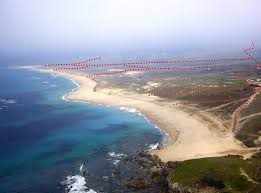
Playa de Traba is a wild beach on the Costa da Morte, known for its stunning natural landscape, its dune, and the mouth of the Traba lagoon, a wetland of great ecological value.
Ask AI about this beach
Instant answers about Playa de Traba

🏖️ Did you know...?
Arena blanca y agua reflejan hasta el 80% de los rayos UV. Este efecto aumenta el riesgo de quemaduras.
About this beach
Table of contents
Introduction
Today we delve into one of those breathtaking corners, a place where nature reveals itself in its purest and wildest state: Playa de Traba, located in the municipality of Laxe, in the heart of the untamed Costa da Morte in A Coruña. If you're looking for an authentic experience, far from crowds and noise, this sandy beach is undoubtedly your next destination. Here, the Atlantic roars with force, the dunes caress the sand, and a lagoon of incalculable ecological value merges with the sea, creating a unique and fascinating ecosystem.
Playa de Traba is not just a beach; it's a landscape. It's a canvas where the green of the vegetation, the gold of the sand, and the deep blue of the ocean blend under the Galician sky, often dotted with clouds that give it a special drama. It's a place to feel, to observe, and to reconnect with the essence of the land. From the moment we set foot on its sand, we understand why the Costa da Morte has that aura of mystery and grandeur. We are faced with a beach that invites contemplation, long walks, and photography, capturing the ephemeral beauty of each wave and the majestic flight of the birds that inhabit its lagoon.
How to Get to Playa de Traba
Getting to Playa de Traba is part of the adventure. Although it's not located in the center of an urban area, access is relatively straightforward and well signposted from the nearby municipalities of Laxe and Camariñas. We recommend taking the AC-432 road, which winds along the coast offering spectacular views in itself. If you're coming from Laxe, the journey takes about 10-15 minutes by car, following the signs towards Traba. From Camariñas, the route is a bit longer but equally scenic.
Once you approach the area, you'll see a small turnoff that leads directly to the beach. The parking is informal, a dirt area set up next to the main road, without marked bays or horizontal signage. It's important to be respectful of the environment and park in an orderly manner to not obstruct the road or damage the surrounding vegetation. During the summer months, especially on weekends, this parking area can fill up, so we advise arriving early to secure your spot. Don't expect major infrastructure; here, the beauty lies in the absence of it, in the naturalness of the landscape that welcomes us.
The Sand and the Water
Playa de Traba is distinguished by the quality of its sand, fine and of a light golden hue that invites you to take off your shoes and feel it under your feet. It's soft sand, perfect for spreading out a towel and enjoying a sunny day, or simply for taking long walks feeling the sea breeze. The expanse of the sandy beach, approximately one kilometer long, allows us to always find a quiet corner, even on the busiest days. It's ideal for lovers of shoreline walks, offering an unbeatable setting to let your imagination soar and enjoy the sound of the waves.
As for the water, we are in the heart of the Galician Atlantic, which means its waters are crystal clear, but also cool. If you're brave, you'll dare to take a dip that will leave you revitalized. It's important to consider that, being a beach open to the ocean, there can be currents and waves, so we always recommend caution, especially if you're not used to Atlantic waters. The color of the water, which varies between turquoise blue and emerald green, is simply mesmerizing and invites us to immerse ourselves in its freshness, even if just for a moment. The mouth of the Traba lagoon at the beach adds a fascinating element, with fresh water mixing with salt water, creating a very particular visual effect.
Services and Facilities
As we've already mentioned, Playa de Traba stands out for its wild and natural character, and this is directly reflected in the limited offer of services and facilities. Don't expect to find showers, permanent toilets, beach bars (chiringuitos) right on the sand, or umbrella and sunbed rentals. Here, the philosophy is to enjoy nature in its purest state, so it's essential that you plan ahead and bring everything you might need: water, food, sunscreen, towels, and, of course, a bag to collect your waste and leave the environment spotless.
However, during the peak summer season (July and August), it is common for the beach to have a lifeguard service. This is an important point to consider, as currents and waves can be intense. We advise you to always heed their instructions and the flags that signal the sea conditions. The presence of lifeguards provides greater peace of mind, especially if you're with children or are not experienced swimmers. Beyond this, the beach offers the essentials: the immensity of the landscape, the power of the ocean, and the tranquility that only such a pristine place can provide. The absence of massive infrastructure is, for us, part of its charm and what makes it such a special destination for nature lovers.
Best Time to Visit
The choice of the best time to visit Playa de Traba will largely depend on the type of experience you're seeking. We, as beach tourism experts, offer you a guide:
- Summer (June, July, August, and early September): This is the most popular time, when temperatures are most pleasant and the chances of sun are highest. It's the ideal time if your intention is to enjoy a traditional beach day, sunbathe, and, for the bravest, take a dip in the Atlantic. Furthermore, it's when the lifeguard service is usually active. However, it's also when